 Contact
 Email an Agent
 Click to Call
 Get Directions
 I would be very interested in how you answer the following question. So if you have the time to comment, please leave a reply at the end of this post, including the season, month or holiday as well as insights why? Just curious!
Question: What’s your best insurance analogy?
For me the answer is easy. It depends on the current season. Of course, I am an insurance agent, which means I can draw a correlation to insurance to everything. That includes the bologna sandwich I am eating. However, this time of year there seems to be an almost endless list of things to associate with insurance. Below are just a few:
- Fall is the time of year that we associate with change and mystery. Insurance
 protects us from the uncertainty that results during periods of change. Fall is also associated with a period preparation and protection. Insurance is no different. We prepare for less desirable times by purchasing insurance.
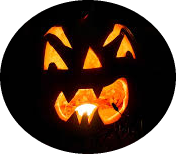
 - Halloween is a time that most of us associate with fear. Ghost, goblins and all sorts of creepy critters running around asking us to fork over a few sugary treats. By doing as requested we avoid and unexpected and frightening trick. That certainly sounds a lot like risk transfer to me.
- Haunted Houses, we all know they’re not real, but the can scare even the bravest soul. Insurance agents have a bad rap. I am not going to say that it isn’t earned. There are a number of agents out there that are similar to the haunted houses; they just aren’t the real thing. Finding a good agent can and will reduce many of the fears that you may have regarding insurance.
- Peanuts, It’s the Great Pumpkin. Every year around this time we all cringe as Charlie
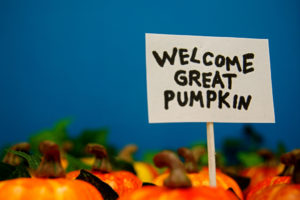 Brown once again put’s his trust in Lucy to hold the football. Every year, in spite of severe ridicule, Linus forgoes the big Halloween sugar score. Waiting in the pumpkin patch for a no show, the Great Pumpkin.
 - In most transactions, the buyer receives some degree of immediate satisfaction. Insurance is not that way at all. In fact, it is one of the only things that we as consumers ever buy that we hope to never use. As a result, insurance consumers can in many regards be compared to Charlie Brown and Linus. They have both made decisions based entirely on trust.
Each of the above associations are valid, but it is the Peanuts analogy that rings the loudest. Insurance shouldn’t be about selling, Insurance is about trust. Think of Lucy as being the insurance agent. Sure she’s a salesperson, a salesperson with a bad memory. She will do everything in her power to convince Charlie Brown to trust that she will hold the ball.
Insurance is something you are required to have or should have. Maybe you don’t know you need it yet, but if you need it then it’s not selling, it’s educating. Everyone knows that Charlie Brown is going to kick the ball. Charlie knows he’s going to, even though she’s not there, the little red-haired girl knows, and yes Lucy knows that Charlie Brown is going to try and kick the ball!
So if Lucy knows that Charlie Brown is going to kick the ball, why does she have to use the full-blown sales pitch? Seriously, she doesn’t have the best reputation to start with. So why not just shoot straight? High-pressure sales must be addictive. Just like Lucy, it seems that there continue to be too many insurance producers trying to sell something that can only be earned. Trust!
So if Lucy is symbolic of the fast-talking hard selling insurance agent, they who should be associated with the insurance consumer. A case can be made for both Charlie Brown and Linus. Both characters display faith that is foolish. This is very similar to what insurance consumers are doing. Savvy consumers are asking questions aimed at obtaining adequate coverages at a fair price, while the foolish are lining up to be sold.
Linus also displays a firm commitment and faith in his beliefs. Once again he forgoes the annual Halloween candy score while failing to prove his theory about the Great Pumpkin. From this standpoint Linus is similar to consumers that refuse to seek advice from multiple sources. Just as Linus’ belief in the Great Pumpkin left him with no candy; insurance consumers may be confronted with paying too much for insurance, being sold inadequate coverages, or both.
 This covers your possessions, whether they are at your home or away with you on vacation. Personal property is often covered on a named peril basis. This means that only the causes of loss listed in the policy section are covered. The coverage is also subject to limitations and exclusions. Types of property having significant value, such as jewelry, fine arts, collectibles, etc., may require special protection. Talk to your agent about scheduling (adding) coverage on a floater which broadens and extends coverage for high-valued possessions.
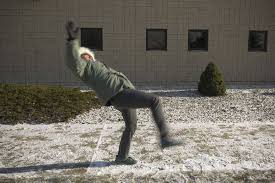 physical injury. Protection includes paying for your defense costs and any financial judgment for covered incidents. Naturally, the coverage would not apply for excluded situations, such as intentional injuries. Example: Joe is sued by a guy he injured after tackling and repeatedly punching him during a pickup basketball game. The injuries from this incident are not accidental and would not be covered.
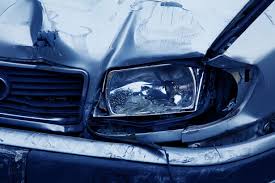 Bodily Injury Liability – insures against injury that you may cause to other persons. The key is that it involves you being held financially responsible for injuries to other persons because of your driving, your ownership or other use of your vehicle.
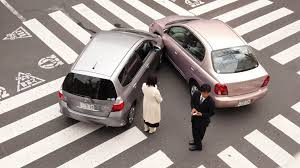 accident caused by a person who has no insurance; a person who can’t be located (“hit and run drivers”); or a person who has insurance but their insurance company is insolvent.
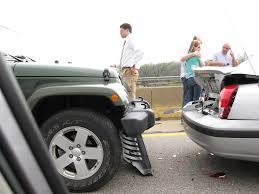 Cars are expensive to buy and repair, providing great reasons for protecting them. If you borrowed money to buy your car, or if you leased the vehicle, the lender or leasing company was likely to make certain that you had coverage to pay for any damage to the vehicle. Below are typical coverages that apply either to the vehicle or to those operating the vehicle:
 compensation. Altering production methods, implementing automation, and revising policies and procedures are just a few avenues where businesses can eliminate specific risk.
 What is risk reduction role in risk management? Unlike the other three methods, risk reduction is not a stand-alone method. It is more akin to a complimenting strategy or modification. Examples of risk reduction would be businesses utilizing sprinklers, keeping parking lots and sidewalk free from ice and snow, or preemptively addressing employee actions that put an organization at risk. Individuals performing regular maintenance on their home or auto are practicing risk reduction. Installing a security system or erecting a fence with a locked entry gate around a pool are also examples of individuals utilizing risk reduction techniques.

 before making these assumptions consider why it’s there. The deductible is in fact risk retention. By retaining the first $500, $1,000 or more, the insured can significantly lower the cost of insurance. Without deductibles, insurers would become inundated by the number of small claims. Smaller claims would also adversely impact administrative cost markedly. Finally, without a deductible, insurance company’s exposure to fraudulent claims would likely skyrocket. Without a deductible, insurers would face mounting costs that could only be offset by raising premiums.