What’s your best insurance analogy?

InsuranceI would be very interested in how you answer the following question.  So if you have the time to comment, please leave a reply at the end of this post, including the season, month or holiday as well as insights why?  Just curious!

Question:  What’s your best insurance analogy?

For me the answer is easy.  It depends on the current season.  Of course, I am an insurance agent, which means I can draw a correlation to insurance to everything.  That includes the bologna sandwich I am eating.  However, this time of year there seems to be an almost endless list of things to associate with insurance.  Below are just a few:

  • Fall is the time of year that we associate with change and mystery. Insurance don't be afraid of insuranceprotects us from the uncertainty that results during periods of change. Fall is also associated with a period preparation and protection. Insurance is no different.  We prepare for less desirable times by purchasing insurance.

  • Halloween is a time that most of us associate with fear. Ghost, goblins and all sorts of creepy critters running around asking us to fork over a few sugary treats. By doing as requested we avoid and unexpected and frightening trick.  That certainly sounds a lot like risk transfer to me.
  • Haunted Houses, we all know they’re not real, but the can scare even the bravest soul. Insurance agents have a bad rap. I am not going to say that it isn’t earned.  There are a number of agents out there that are similar to the haunted houses; they just aren’t the real thing.  Finding a good agent can and will reduce many of the fears that you may have regarding insurance.
  • Peanuts, It’s the Great Pumpkin. Every year around this time we all cringe as CharlieInsurance Sales Brown once again put’s his trust in Lucy to hold the football. Every year, in spite of severe ridicule, Linus forgoes the big Halloween sugar score.  Waiting in the pumpkin patch for a no show, the Great Pumpkin.
  • In most transactions, the buyer receives some degree of immediate satisfaction.  Insurance is not that way at all.  In fact, it is one of the only things that we as consumers ever buy that we hope to never use.  As a result, insurance consumers can in many regards be compared to Charlie Brown and Linus.  They have both made decisions based entirely on trust.

Each of the above associations are valid, but it is the Peanuts analogy that rings the loudest. Insurance shouldn’t be about selling, Insurance is about trust.  Think of Lucy as being the insurance agent.  Sure she’s a salesperson, a salesperson with a bad memory.  She will do everything in her power to convince Charlie Brown to trust that she will hold the ball.

Insurance is something you are required to have or should have.  Maybe you don’t know you need it yet, but if you need it then it’s not selling, it’s educating.  Everyone knows that Charlie Brown is going to kick the ball.  Charlie knows he’s going to, even though she’s not there, the little red-haired girl knows, and yes Lucy knows that Charlie Brown is going to try and kick the ball!

So if Lucy knows that Charlie Brown is going to kick the ball, why does she have to use the full-blown sales pitch?  Seriously, she doesn’t have the best reputation to start with.  So why not just shoot straight?  High-pressure sales must be addictive.  Just like Lucy, it seems that there continue to be too many insurance producers trying to sell something that can only be earned.  Trust!


So if Lucy is symbolic of the fast-talking hard selling insurance agent, they who should be associated with the insurance consumer.  A case can be made for both Charlie Brown and Linus.  Both characters display faith that is foolish.  This is very similar to what insurance consumers are doing.  Savvy consumers are asking questions aimed at obtaining adequate coverages at a fair price, while the foolish are lining up to be sold.

Linus also displays a firm commitment and faith in his beliefs.  Once again he forgoes the annual Halloween candy score while failing to prove his theory about the Great Pumpkin.  From this standpoint Linus is similar to consumers that refuse to seek advice from multiple sources.  Just as Linus’ belief in the Great Pumpkin left him with no candy; insurance consumers may be confronted with paying too much for insurance, being sold inadequate coverages, or both.
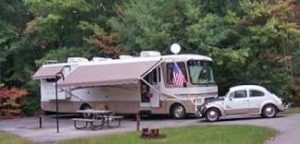
“Fold It Up This Way”: Five Things You Need To Know About Motor Home Insurance

Congratulations! You’ve Purchased A Motor Home

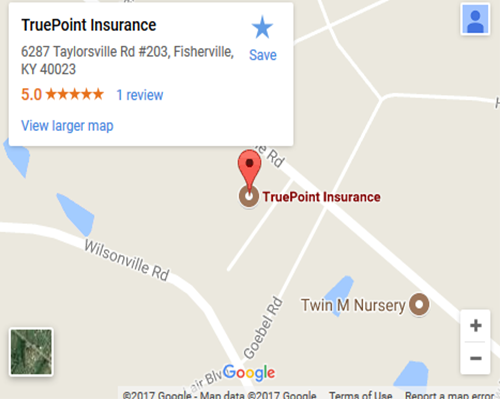
RV insurance, rv, insurance, KY, OH, TN, RV insurance, KY RV insurance, TN RV Insurance, OH RV InsuranceThe staff at TruePoint Insurance in Fisherville, KY knows that the truth about what you need with insurance is the most important factor. The staffers here are honest and will tell you exactly what is necessary to make your motorhome experience the very best that it can be. You’ve taken the plunge. You’ve purchased the motorhome. Now, how do you best protect it?

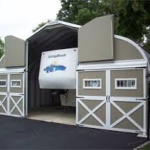
Arm Yourself With Information 

The best insurance policies are written when consumer and insurance agents know everything there is to know about what has to be protected. It’s your motorhome. Ask yourself some key questions to get your mind rolling as well as your insurance agents.

Arm yourself with answers to these five questions before you consider the amount of coverage and type of coverage you will need for your motorhome:

  • Who will be driving your motorhome? How old is the driver? Will there be other drivers on occasion?  Do you have a clear idea of the driving histories of all of the drivers of your new motorhome?  Motor Home, Motor Home Insurance, KY motor home insurance, OH motor home insurance, TN motor home insurance, Cheap motor home insurance
  • Where do you plan to take your new motorhome? Will you be driving internationally? Will you be driving out of Cheap RV insurance, Cheap Motor Home insurance, do i need motor home insurance, do i need rv insurance, insurance for fifth-wheel, insurance for rv, insurance for motor homestate? How often will you be driving out of state or internationally?
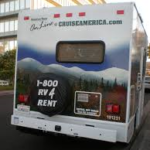
  • Where will your motorhome be stored when not in use?buy rv insurance, buy motor home insurance, but fifth wheel insurance, bu insurance for rv, by insurance for motor home, buy insurance for fifth wheel
  • Are you going to let others rent your motorhome when you and your family are not using it?

A complete, comprehensive conversation with an insurance agent at TruePoint Insurance in Fisherville, KY today can negate regrets tomorrow. Call us today or come in so that we can discuss how your motorhome can be the rolling bed of recreational freedom and enjoyment for yourself and your family.

What is insurance? Part 2 of 2

Understanding InsuranceInsurance


What is insurance?


Practice Risk Avoidance at your own risk

Individuals and business also practice a direct from risk avoidance.  Suppose you sold your car and committed to using public transportation.  Without a car, you have successfully eliminated your primary automobile liability exposure.  And without the risk, you are no longer required to carry the state-mandated insurance.

Businesses might opt to outsource specific functions allowing them to eliminate multiple risks ranging from property to casualty to workers Risk Avoidance at your own riskcompensation.  Altering production methods, implementing automation, and revising policies and procedures are just a few avenues where businesses can eliminate specific risk.
Risk avoidance is not a practical solution for all exposures, but it can be a very cost-effective solution when implemented correctly.  Those practicing this method must realize that risk avoidance may not be as simple as it appears.  You may have noticed in the auto liability example above, the phrase “primary exposure.”  This suggests that there continues to be potential exposure even after the sale of the vehicle.

You don’t have to own a vehicle to drive.  People rent cars all the time.  While it is hard to imagine a scenario where you could rent a vehicle without liability insurance if you did you would be exposed.  A more likely scenario would be your exposure in the event you borrowed a friend’s car. Coverage stays with the auto, so as long as you had permission from your friend to drive their vehicle, the policy covering the car would protect you.

Borrower Beware!  What auto liability limits does your friend have?  Did you ask?  Does it matter?  Let’s assume that the vehicle has the minimum coverages allowed by your state.  For us, that would be $25,000 for bodily injury for any one person, capped at $50,000 if multiple individuals are injured and $25,000 for property damage.

As the driver of the vehicle, you are potentially liable for damages that exceed the vehicles policy limits.  In this scenario, the vehicle coverages are limited, placing you in a position with significant exposure.  In your past, this wasn’t an issue.  When you owned an auto and had insurance, your policy extended liability protection to you even when it wasn’t your car.  Your decision to practice risk avoidance has triggered additional and perhaps unforeseen exposures.

There is an old saying, “You’re picking up pennies in front of a train,” or more simply said, you’re taking too much risk for only a modest reward.  If you practice risk avoidance, you better know the train schedule.


Risk Reduction; Modifying exposures for everyone’s benefit

Reduce riskWhat is risk reduction role in risk management?   Unlike the other three methods, risk reduction is not a stand-alone method.  It is more akin to a complimenting strategy or modification.  Examples of risk reduction would be businesses utilizing sprinklers, keeping parking lots and sidewalk free from ice and snow, or preemptively addressing employee actions that put an organization at risk.  Individuals performing regular maintenance on their home or auto are practicing risk reduction.  Installing a security system or erecting a fence with a locked entry gate around a pool are also examples of individuals utilizing risk reduction techniques.

When combing risk reduction methods with risk retention, the results directly benefit the individual or business.  These actions may have one of two outcomes.   The installation of a sprinkler system is an action that results in lessening the loss.  Steps taken to reduce risk can also lower the probability of loss.  The previously mention action to address snow and ice removal would most likely reduce the potential for a loss.


Don’t Fear the Loss Control Man!

The role of Loss Control can be confusing.  Insurance companies can be viewed as risk management consultants and as risk transfer solutions. However, a fine line exists between providing beneficial risk management counseling and becoming a deterrent to business.  The action of an insurance companies loss control efforts can easily gauge the company’s success in balancing the two roles.  When this group with providing risk reductions techniques for the insured they become a catalyst for change that becomes genuinely value added for both the insured and the insurer. Loss Control units aimed at creating awareness of potential risk reduction opportunities will have a positive financial impact on the insurance company, which should, in turn, have a positive effect on the insured’s cost of risk management.

When you buy an insurance policy, you are purchasing much more than a risk transfer agreement.  The insurance policy today has evolved to incorporate many aspects of risk sharing, risk retention and indirectly risk avoidance.  The final method of risk management, risk reduction also comes into play.  Acting primarily as an incentive, or a chance to reduce the overall cost insurance.


 So what is insurance?  Today, insurance is a contract/relationship between an insured and an insurer where the insurer utilizes modern risk management tools and encourages proactive steps by the insured which will lead to an increasingly efficient process of indemnifying the insured against specified peril(s). 

Access Part 1 of this series 

     copyrighted 2015-2018 TruePoint insurance group, llc all rights reservedReturn to TruePoint Home Page


What is insurance?


Insurance      Understanding Insurance


Insurance

Some people think that insurance is risk management.  But industry professionals will argue that insurance coverage is only one component of the risk management process.  What’s the difference between the two?  Risk management is a discipline used to identify, evaluate and address specific risks.  A risk management plan will utilize one or more of the four risk management methods.

The Four Risk Management Methods

     Risk Avoidance                  Risk elimination

     Risk Reduction                  Reduce

     Risk Sharing                       Transfer, Insurance

     Risk Retention                   Do Nothing, Self-Insure


So what is Insurance?

If insurance isn’t risk management, then what is it?  Insurance is commonly considered to be a mechanism for risk transfer.  If you look up the word insurance, you are apt to find the words “transfer of risk” or “risk sharing.”  So insurance is risk sharing or risk transfer?  Yes.  But it’s more.

Insurance is a mechanism that can be used to transfer risk from one party to another. In exchange for a premium, insurance companies will agree to provide indemnification.  Indemnification, or the protection against loss, can be purchased to mitigate a large number of exposures.  Insurance products exist to transfer both property and liability risks.


Insurance Today

“Ah, the joys of homeownership,” words muttered regularly by homeowners.   Homes generate problems.  Many associated with either property or casualty exposures.  Typically these risks are transferred to an insurance company through a homeowner’s policy.  In a pure form of risk transfer, the insurance company would make the insured whole in the event of a specified loss.  But most of us don’t transfer all the risk.  The amount we recoup will be the value lost less a deductible.

Most property policies have a built-in risk retention mechanism, the deductible.  On the surface, this may seem to be negative.  But before making these assumptions consider why it’s there.  The deductible is in fact risk retention.  By retaining the first $500, $1,000 or more, the insured can significantly lower the cost of insurance.  Without deductibles, insurers would become inundated by the number of small claims.  Smaller claims would also adversely impact administrative cost markedly.  Finally, without a deductible, insurance company’s exposure to fraudulent claims would likely skyrocket.  Without a deductible, insurers would face mounting costs that could only be offset by raising premiums.
At first blush, deductibles appear to work to the benefit of the insurance companies.  Deductibles no doubt benefit insurance companies.  But after considering the implications, it would seem that consumers are reaping the most value.


Today’s insurance contains a risk retention component


When insurance companies avoid risk it benefits the company and the consumer

You may have learned from experience that insurance companies will not provide coverage in some instances.  Insurance companies don’t want all risks.  By insuring only the risk that they prefer, they are practicing risk avoidance.  Trampolines, pit bulls, fireplaces, and log homes are good examples of risk that many insurance companies avoid.

Insurance companies underwriting higher risk exposures are expected to have increased losses.  What does this mean for the insured?  That’s hard to say.  It doesn’t mean that you can’t get insurance.  You most likely can.  It does mean that you will have fewer options and in most cases, reduced competition leads to higher costs.


Rejecting certain risk helps insurance companies, but how does it help the consumer

The practice of risk avoidance improves insurance companies underwriting results.  In theory, insurance companies that can successfully manage their risk are more likely to have higher profitability and faster capital growth.  As the company’s capital grows, so does the need to write additional insurance.  If enough insurance companies are experiencing the same results, competition will increase. The increased appetite for risk will ultimately impact the insured, by putting downward pressure on premiums.


Trickle-down risk management

The benefits from risk avoidance can be direct or indirect. The risk avoidance techniques used by insurance companies have both a direct and indirect effect. As mentioned, the direct actions put downward pressure on the cost of insurance. These practices can passively encourage consumers to avoid unacceptable risks. Over time, sound risk management practices trickle-down which further reduce risk management costs.


Access part 2 of this 2 part series which will be published on 9/20/18 


      copyrighted 2015-2018 TruePoint insurance group, llc all rights reservedReturn to TruePoint Home Page

Compare and Save on Kentucky Car Insurance: Instant Online Real-Time Quotes

Kentucky Car Insurance

Compare and Save on Kentucky Car Insurance: Instant Online Real-Time Quotes

 
Getting a car insurance quote from one of the best insurance options available doesn’t have to be a chore. TruePoint Insurance is making it easier than ever to compare prices.
 
Here’s how it works:
  • Choose your desired product from the Get Quotes section.
You’re now on track to receive up to 13 car insurance companies. You see quotes from names like Travelers, The Hartford, AAA, Safeco, and many more.
 

Online Car Insurance Quotes/ Simple, Effective,and Informative

 
Most online quote portals provide little if any price information. That’s not the case for TruePoint’s Online Portal, which provides actual and real-time feedback. The results of this five-minute process will vary. However, at this point, most will have a reasonable idea of their options.
 

Customer Focused Quotes

 
The biggest benefit to the TruePoint Online Portal: You will not be harassed by an unrelenting and large number of insurance agents. TruePoint’s quotes are never sold as lead. The only two people that will see your quote; you and a TruePoint agent.


TruePoint’s Role

 
Are you paying too much for car insurance? TruePoint does not attempt to answer this question. That is for you to decide and it is up to you whether you proceed. Regardless, you should now have a reasonable idea of how your current car insurance premium stacks up.
 
If you do go forward with your auto insurance quote, TruePoint will:
 

Cost/ Insurance Premium

Unlike some that work hard to diminish the importance of price, TruePoint recognizes the importance of keeping your car insurance premium as low as possible.
 

Quality Protection

TruePoint takes a customer-focused approach. That means the client’s interest must come first. As your agent, TruePoint doesn’t tell you what to do. Nor do they show you a single option that they think is your best insurance option. They take the time to make sure you’re armed with the knowledge to make your own decisions.
 
TruePoint is sensitive to price, committed to raising consumer insurance awareness, and constantly reviewing insurance options for Kentucky car owners. These are just a few of the reasons people give when they say that:
 
TruePoint Insurance is                                              Phone: (502) 410-5089
Insuringky.com 
Return to TruePoint Home Page

Kentucky 6A District 6

Friday Night Football in Kentucky

a courtesy of TruePoint Insurance brings you Kentucky High School Football

For more Kentucky High School Football

Kentucky High School Football Scores from across the State Follow this link for Scores from across the State

Return to TruePoint Home Page

Certificate of Property Insurance

    Key Insurance Words and PhrasesTruePoint Insurance Logo


August 15, 2018

Certificate of Property Insurance

Is one of the two forms in which certificates of insurance are issued.  The primary purpose of the certificate of property insurance is to provide proof that is in place and being maintained on buildings, business personal property, equipment and/or other property that may be covered.  This certificate, Acord Form 124 can be presented by the broker or insurance company as proof of insurance.


Related Term:Return to TruePoint Home Page


copyrighted 2015-2018 TruePoint insurance group, llc all rights reserved

Certificate of Liability Insurance

    Key Insurance Words and PhrasesTruePoint Insurance Logo


August 14, 2018

Certificate of Liability Insurance

Is one of the two forms in which certificates of insurance are issued.  The primary purpose of the certificate of liability insurance is to provide proof that an individual or entity has insurance coverage in place prior to entering a business relationship with another.  The business relationship between a general contractor and a subcontract is a good example.  The general contractor can possibly be held responsible for some actions of subcontractors working under him.  If the subcontractor doesn’t have insurance, or if their policy limits are inadequate, the general contractor and/or their insurance company may be held accountable.

Related Term:Return to TruePoint Home Page


copyrighted 2015-2018 TruePoint insurance group, llc all rights reserved

Strategic Independent Agents Alliance (SIAA)


TruePoint Insurance Logo

Key Insurance Words and Phrases


Strategic Independent Agents Alliance (SIAA)

SIAA is a national alliance of independent insurance agencies.  Founded in 1983, this is the largest alliances of insurance agents and as such creates significant benefits for its member agency.   The playing field is leveled immediately!  Upon joining the organization even the smallest agencies have access to resources that allow them to compete with much large agencies.

Return to TruePoint Home Page


copyrighted 2015-2018 TruePoint insurance group, llc all rights reserved