TruePoint Insurance is one of Georgia’s fastest growing insurance agencies. We are affiliated with SIAA, a network of over 5,000 insurance agencies across the US, who by joining together have increased their strength and stability...
A variety of businesses
are routinely operated in homes. This article discusses aspects of particular
operations. Refer to Home Businesses – Basics for background information
on coverage as well as our other articles discussing different in-home businesses.
Daycare or In-Home
Schools
Coverage for abuse or
sexual assault for small schools is often difficult to obtain at a reasonable
price. Limited corporal punishment coverage for teachers who are employed by a
school system may be available from your homeowners carrier.
If you are an independent tutor or run your own school, most homeowners
policies cannot be modified to include corporal punishment. Abuse and corporal
punishment may be available through the association(s) that
specializes in your type of school.
While the company that
writes your HO policy may be willing to add an endorsement to cover piano
lessons, most will not want to cover a three-to-five child daycare operation.
Liability coverage may be purchased separately. Coverage for property and
liability can be provided through a Businessowners policy,
but none of these forms includes professional liability or abuse or corporal
punishment.
Does your homeowners insurance cover a small daycare?
Specialty schools, such
as ballet, sports, personal training, animal training, or horseback riding will
require specialty coverage. Again, your trade organization, or independent
agent can often find you coverage at a reasonable price.
Workers compensation is
essential for any person you employ.
Driving students in
private vehicles or bus-like vehicles poses special problems. You must hold a
Commercial Driver’s license if you haul more than 16 people including the
driver. Your school is probably too small to qualify for standard business auto
insurance. If standard coverage is unavailable, many states have assigned risk
pools and other mechanisms to provide you coverage-sometimes at reasonable
prices. A good independent agent will understand these markets.
Your state will also
have laws regulating the transportation of students and these laws may require
a special license when transporting fewer than 16 people. Subcontracting the
driving does not lessen your responsibility for a whole raft of laws from
vehicle accidents, workers compensation, ADA, and whether the driver has met
the new substance abuse requirements.
COPYRIGHT: Insurance Publishing Plus, Inc. 2016
All rights reserved. Production or distribution, whether in whole or in part, in any form of media or language; and no matter what country, state or territory, is expressly forbidden without written consent of Insurance Publishing Plus, Inc.
Learn about flood insurance before the waters start to rise.
Anyone that lives in the Fisherville, KY area needs to carefully consider their home insurance needs. One form of insurance that should be considered is flood insurance, which will provide specific coverage if your home is damaged by a local flood. There are several situations when someone should get flood insurance on their property in this area of Kentucky
Anyone with Lender Requirement
Does your home mortgage require flood insurance?
The first situation when someone in Kentucky should get a flood insurance policy is if they are required to have it by their lender. Mortgage lenders are aware of how serious flood damage can be. Due to this risk, lenders often require borrowers to carry flood insurance if they are in a flood zone. Depending on what flood zone you are in, the lender could require you to escrow payments monthly to ensure coverage.
Needs to Cover Against Risk
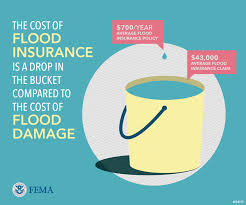
Flood Loss versus Cost. You do the math!
Even if there is a small risk for flood damage in your area, you should still consider getting flood insurance. If you do not have a mortgage or are not required to carry it, you should still carefully assess your risks and current insurance coverage. If you are near a waterway that could flood, you should consider getting an additional flood insurance policy to ensure you are fully covered at all times.
When you are looking to learn more about flood insurance in the Fisherville, KY area, you should speak with the team at TruePoint Insurance. Choosing a flood insurance policy can seem quite complicated and challenging. When you call TruePoint Insurance, the team of insurance professionals will be able to provide you with a full assessment to help you determine what type of insurance is right for you. They can then help you get into a policy that provides adequate coverage.
What are Auto Liability Limits? Auto Liability Limits are the part of your insurance that protects you for damages to others.
What happens if you or an auto you own are involved in an accident and deemed to be at fault? You will be liable for losses to the other party’s vehicle and any injuries resulting from the accident.
You can find your Auto Liability Limits on your declarations page. Auto limits are the three numbers which look like those below:
100/300/100
The first two numbers, 100/300, represent the coverage available for BI, or Bodily Injury. Your BI protects you when you are at fault, and as a result, injury has occurred to others.
The first number (100) indicates that the policy provides up to $100,000 of coverage to any one person. The (300) states that the total amount available to cover all injured individuals. The number 300 indicates that BI has a $300,000 cap.
The final number represents Physical Damage. It is also referred to as PD. Physical Damage coverage protects against property damage caused by the insured. In our example, the number (100) indicates that you have $100,000 in PD coverage.
Several States have recently increased the required minimums For Auto Insurance
Liability Limits represent the amount that your insurance company is legally liable for. Those limits vary and are dependent on the amounts you requested. Each state sets minimum required limits.
Below are the required limits required by the states served by TruePoint Insurance:
Georgia 25/50/25
Indiana 25/50/25
Also, Indiana requires minimum limits for Uninsured and Underinsured Motorist 25/50/25
Kentucky 25/50/25
South Carolina 25/50/25
In addition, South Carolina requires minimum limits for Uninsured and Underinsured Motorist 25/50/25
What happens when the cost exceeds my coverage limits? As insurance agents, we have thoughts and suggestions related to auto insurance. However, there isn’t a right answer to the question above. Will the injured party pursue the claim once it exceeds the limits? For those that do seek to be fully repaid, they will likely seek recourse in a courtroom. This takes us or any other insurance agent out of the picture. It also makes it impossible for an agent to answer this question.
Before purchasing car insurance:Take the time to speak with an agent; one that is willing to provide insurance decisions that are right for you.
A variety of businesses
are routinely operated in homes. This article discusses aspects of particular
operations. Refer to Home Businesses – Basics for background information
on coverage as well as our other articles discussing different in-home
businesses.
Homeowners insurance seldom covers a business
Wholesale – As a wholesaler, here are some coverage options
for your consideration:
Businessowners Policy – If you are a manufacturer’s representative with limited
inventory, some insurance companies will cover your business with a BOP. A BOP
provides broad coverage for buildings, personal property, loss of
business income, extra expense incurred to remain in business (after a fire or
other covered cause of loss), premises liability and medical payments.
If
you have more than $1,000 of goods off-premises in transit, you will need to
add additional coverage. Coverage for goods stored at other locations must be
added to the policy.
Commercial Package Policy – If you cannot qualify for a BOP, your agent will
probably have to build a special commercial package policy to meet your
needs. You will need a competent commercial lines agent to help you.
Commercial lines agents have both the expertise to design the appropriate
coverage and the markets for your wholesale business.
Workers Compensation – You will need workers compensation coverage for any employee – even part-timers.
Commercial Auto Policy – You may need commercial automobile insurance if you
deliver anything or if your vehicle is larger than a car, van or small pickup,
or if the vehicle is owned by a corporation.
COPYRIGHT: Insurance Publishing Plus, Inc. 2016
All rights reserved. Production or distribution, whether in whole
or in part, in any form of media or language; and no matter what country, state
or territory, is expressly forbidden without written consent of Insurance
Publishing Plus, Inc.
As you approach your golden years, you may find that your plan to provide for your dependents isn’t as solid as you’d like. In these cases, a customized life insurance strategy from TruePoint Insurance can help you create a better future for those you may leave behind. While age is an important factor, older residents in the Fisherville, KY area still have life insurance options that can build a stronger foundation for their dependents.
Be Realistic
Your age isn’t the only factor agents look at when considering life insurance coverage. Your agent will also look at your:
History of tobacco use
Gender
Health history
High-risk lifestyle activities
Driving record
Senior citizens with the right combination of factors can still find affordable and adequate life insurance coverage. Your insurance agent can help you understand how these factors affect your current options.
Try a Term Policy
Term life policies are contracts that provide coverage for a short period of time. The coverage period can be anywhere from a few months to several years. These contracts come with very specific coverage requirements. Your insurance agent can help you create a contract that covers your most likely scenarios to ensure your dependents receive full payment.
Bulk Up Existing Policies
Your existing life insurance coverage may not be enough to cover current circumstances. In that case, your insurance company may be willing to work with you to expand coverage.
Think About Survivorship Insurance
Survivorship life insurance is a highly flexible option for married couples with dependents. The shared risk generally decreases premiums and maximizes potential benefits. These contracts are designed to pay out when the last covered subscriber passes away.
Find the Best Strategy for Your Family’s Financial Future
TruePoint Insurance agents can help you find the life insurance coverage you need for your family’s future. We offer customized policies for residents in the Fisherville, KY area. Call us to talk about your life insurance options.
A variety of businesses
are routinely operated in homes. This article discusses aspects of particular
operations. Refer to Home Businesses – Basics for background information
on coverage as well as our other articles discussing different in-home
businesses.
Retail – Persons with in-home retail operations must look
beyond an HO policy for coverage.
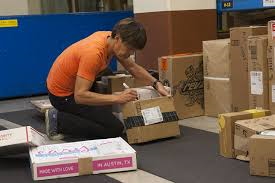
Home-Based Retail Business owner prepare packages
The Businessowners Policy (BOP) provides broad coverages for buildings, personal property, loss of business income and extra expenses incurred to remain in business (after a fire or other covered cause of loss), premises liability and medical payments. If you have more than $1,000 of goods in transit, you will need to add additional coverage. Goods stored at other locations must be added to the policy, normally as an additional location.
You will need workers compensation coverage for any employee, even part-timers. You may need commercial automobile insurance if you deliver anything or if your vehicle is larger than a car, van or small pickup or if the vehicle is owned by a corporation.
Note: some insurance companies can offer amendments to your homeowners
policy that can cover certain, in-home businesses.
COPYRIGHT: Insurance Publishing Plus, Inc. 2016
All rights reserved. Production or distribution, whether in whole or in part, in any form of media or language; and no matter what country, state or territory, is expressly forbidden without written consent of Insurance Publishing Plus, Inc.
When’s the last time you consider the impact of a street or highway intersection? For us, it was on our first trip to Savannah, Georgia.
Intersections should
be designed with driver and passenger safety in mind. However, In the US,
roughly 2.5 million auto accidents occur in intersections each year. That’s 10%
of the 250 million vehicles in the US.
Solving the
intersection dilemma in a roundabout way
The Dilemma: Intersection or Roundabout
For decades Americans have had a fancy for
cars imported from Europe. US consumers have found numerous reasons to support
their purchase of imported autos. Arguments included performance, economy,
style, and a plethora of other advantages. But the most frequent and compelling
has been safety.
In recent decades America has been importing
another vehicle for auto safety. This time, it’s not automobiles, and it is
considerably less popular with American drivers. Roundabouts, an alternative to
intersections, have long been popular in Europe. Also known as traffic circles,
rotaries, or road circles, they replace intersections.
Turning Left is Dangerous to Your Health
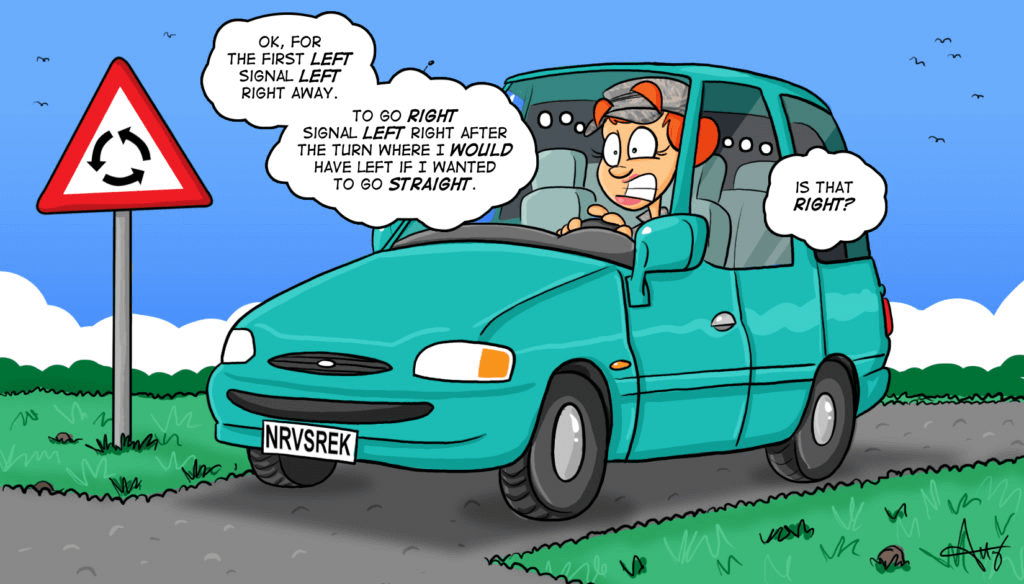
Roundabouts have been slow to catch on in America. Why? I’ve seen some reasons, none of which make sense. What does makes sense are traffic circles:
Speed Slower speeds reduce damage and fatalities
Eliminates Left Turn Why does UPS give drivers routes designed to avoid turning left? Because it reduces accidents and delays.
Energy Efficient Braking to a full stop waste fuel. Starting from a dead stop is even more inefficient.
Trigonometry Eliminates many of the more dangerous angles in which a car can be struck.
Safety Most important, roundabouts lead to improved safety.
The Institute for Highway Safety reports that roundabouts reduce crashes involving injury by 75%. Even more amazing the study reports collisions with fatalities are reduced by 90%.
Coming full circle on street and highway intersections
Why isn’t your insurance agent talking about
roundabouts?
There may be a good reason, but I can’t think
of a single one at the moment.
Insurance agents sell products that indemnify the insured in the event of a loss. Good insurance agents work with prospects and customers to help identify risk. They then provide input and access to effective solutions.
By raising awareness of the safety benefits of
traffic roundabouts, we at TruePoint Insurance believe that we are doing our
part to reduce risk. We’re arming our clients and prospects with the data that
supports traffic circle safety.
Compared to the intersections commonly used in
America, Roundabouts significantly reduce risk. The 37% reduction in overall
collisions may pale in comparison to the 75% reduction in injury collisions.
And while both fall short of a 90% reduction in fatality collisions, this is
still jaw-dropping data.
The agents of TruePoint Insurance encourage
each of you to take a stand. Raising awareness is the path to safer streets and
roads. Saving lives by performing an action that will save money on insurance.
Roundabouts significantly reduce risk when
compared to the intersections used today. The 37% reduction in overall
collisions may pale in comparison to the 75% reduction in injury collisions.
And while both fall short of a 90% reduction in fatality collisions, this is
still jaw-dropping data.
The agents of TruePoint Insurance encourage each of you to take a stand. Raising awareness is the path to safer streets and roads. Saving lives by performing an action that will save money on insurance.
A variety of businesses
are routinely operated in homes. This article discusses aspects of particular
operations. Refer to Home Businesses – Basics for background information
on coverage as well as our other articles discussing different in-home
businesses.
Today’s Landlords are held responsible for their actions
Landlord
The homeowners policy is
designed to cover landlord-occupied residential buildings, landlord-owned
personal property, and loss of rents (after a fire or other covered cause of
loss), premises liability and medical payments. Note that the maximum occupancy
that may be covered under an HO policy is a four-family dwelling. A
dwelling policy may be used for 1-4 family structures that are not also
occupied by the landlord.
For landlords with
residential property containing from five to sixty units,
a Businessowners policy (BOP) is usually appropriate. It insures
buildings, landlord personal property, loss of rents (after a fire or
other covered cause of loss), premises liability and medical payments.
Most Bed and Breakfasts
do not qualify for coverage either in the homeowners or dwelling insurance
program. Bed and Breakfasts will require a combination of tenants coverage for
the resident owner/manager, and a BOP to cover buildings, landlord owned
personal property in boarders’ rooms, loss of business income (rents and fees)
and the extra expense to operate (after a fire or other covered cause of loss),
premises liability and medical payments.
Contracts often drive rental insurance policies
For landlords who have
office or retail tenants, the BOP provides broad coverages for
buildings, landlord personal property, loss of rents (after a fire or other
covered cause of loss), premises liability and medical payments.
Worker compensation is necessary for any employee. Talk with your agent. Most states require workers compensation for resident managers even if you provide only free lodging as payment. Make sure you have certificates of insurance for any subcontractors (painters, plumbers, etc.) you hire to do work for you. If the subcontractor has no insurance, you may be responsible for the subcontractor’s work-related injuries.
COPYRIGHT: Insurance Publishing Plus, Inc. 2016
All rights reserved. Production or distribution, whether in whole or in part, in any form of media or language; and no matter what country, state or territory, is expressly forbidden without written consent of Insurance Publishing Plus, Inc.
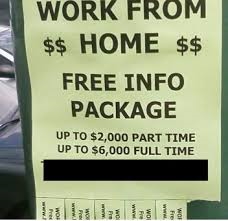
Homeowner (HO) policies aren’t meant to insure businesses that are run out of a home. Premiums paid for homeowner’s coverage are for handling losses related to the ownership and use of a residence and related structures. Therefore no liability coverage is available for business activities such as customers who slip and fall on your premises, damage to business property (owned or in your control), injury caused by things you make (product liability), or damage due to services that you promote or provide. It is also unlikely that an insurer would provide a legal defense against business-related claims.
Be sure to speak with your insurance agent before opening a business in your home.
Generally, an HO policy does not provide workers compensation coverage for any employee. Medical expense and liability coverage may be available for workers who are ineligible for worker’s compensation, such as maids, butlers, or nannies, but such coverage only applies if an injury occurs while performing residential tasks.
Example: You send your nanny to deliver copies of your business
proposal and, on the way to the client, she is seriously injured in a fall.
Your policy won’t provide any medical expense coverage for your nanny because
she was performing a business-related chore.
There is no coverage for detached garages, barns, or similar structures on your residence premises if they are used in whole or part for the business.
Example: You store $3,000 worth of equipment and
supplies that you use in your job in your garage and the garage burns down. The
fire loss to the garage becomes ineligible because of its partial business use.
A basic HO policy may
protect certain property. However, the coverage may be limited to as little as
a few hundred dollars. Items qualifying for limited coverage include business
personal property kept in or around your home, business personal property kept
at a location other than in or around your home or landlord’s furnishings. One
way to improve your coverage is to add policy options that do the following:
increase the coverage limits for business personal property
cover garages and other buildings that are rented to others
protect electronic business equipment which is usually used in a vehicle while such equipment is located outside of a vehicle
provide theft coverage for the landlord’s property
acquire limited business personal property and liability coverage for an in-home daycare
cover a condo unit owners’ liability for damage caused by renters
provide premises liability coverage (i.e. a customer slips and falls)
A variety of businesses
are routinely operated in homes. This article discusses aspects of particular
operations. Refer to part one for background information on coverage
basics as well as our other parts discussing different businesses.
Sales Office
Usually, an HO policy does not offer much protection for business property. In fact, available coverage may be up to only $2,500 for personal property used for business and kept on the residence premises. Further, no coverage applies to a business property such as inventory, product samples, or items being held for delivery. Finally, even optional coverage excludes property related to a business conducted on the premises. For example, you are a cosmetic sales rep who also holds make-up parties in your home. For customer convenience, you keep an inventory of cosmetics at home. The HO policy will not cover this property.
If you are a salesperson operating out of your home and have limited inventory, some companies will cover you with a Businessowners Policy (BOP). A BOP provides broad coverages for buildings, personal property, loss of business income and extra expense incurred to remain in business (after a fire or other covered cause of loss), premises liability and medical payments. If you have more than $1,000 of goods off-premises in transit, you will need to add additional coverage. Goods stored at other locations must be added to the policy.
If you cannot qualify for a BOP and a home business endorsement or separate policy fails to meet your needs, your agent will probably have to build a special commercial package policy to handle your business. Commercial lines agents have both the expertise to design the appropriate coverage and access to the markets that offer policies for your sales business.
In part one of this article, we discussed what coverage issues must be considered when running a sales office out of a home. Besides the protection previously mentioned, you will need workers compensation coverage for any employees, even part-timers, and, if you deliver anything or if your vehicle is larger than a car, van or small pickup, you may need commercial automobile insurance. Another reason for buying a commercial auto policy is if any auto is corporately owned.
Professional Offices
Regarding doctors,
attorneys, architects or similar occupations, whether your home office is your
only office or simply a satellite office, you will need to work with an
insurance agent who is familiar with the coverages that are appropriate
for professionals.
BOPs are suitable for
most professional offices and can cover buildings, personal property, loss of
business income, extra expenses incurred to operate the business (after a fire
or other covered cause of loss), premises liability and medical payments.
Consult with your agent
or your professional association(s) for professional liability and errors and
omissions coverage.
COPYRIGHT: Insurance Publishing Plus, Inc. 2016
All rights reserved. Production or distribution, whether in whole or in part, in any form of media or language; and no matter what country, state or territory, is expressly forbidden without written consent of Insurance Publishing Plus, Inc.
Boating season can bring out the best in Kentucky residents, especially those residing around Fisherville, KY. At TruePoint Insurance, we understand the water life and enjoy it with our clients. While we all enjoy days and afternoons out on the water, we also want you to remember three tips to stay safe while out on the water.
Keep Your Life Jacket On
It is not uncommon to travel the Kentucky waters and catch boaters riding without their life jackets. In the event of an accident, the riders could potentially be thrown from the boat. With a life jacket, they will surface to the water and be able to breathe while getting to safety.
Keep the Crowding Minimal
Each boat comes with a weight limit and a capacity amount based upon its size. A common issue that happens with boaters in Kentucky is overloading the boat with either people, supplies, or both, causing it to flip from the stress it is under. If you are planning to use your boat for fishing and hauling equipment, make sure sure that you do not carry too many people out with you.
Leave the Alcohol Onshore
While you are operating your boat, you should not be drinking. The pressure and influence to drink while operating the boat are limited if it never comes onto the boat with your passengers. Leave the alcohol onshore and stock your boat instead with fresh bottled water and sports drinks to keep everyone hydrated while enjoying the water.
Top it Off with Boat Insurance
One of the best ways to secure your boat, however, is to have boat insurance should you find yourself in an accident while out on the water. If you live in the vicinity of Fisherville, KY, call our agents at TruePoint Insurance for more information on our policy offerings.
 Contact
 Email an Agent

 Click to Call
 Get Directions