Insurance
Some people think that insurance is risk management. But industry professionals will argue that insurance coverage is only one component of the risk management process. What’s the difference between the two? Risk management is a discipline used to identify, evaluate and address specific risks. A risk management plan will utilize one or more of the four risk management methods.
The Four Risk Management Methods
Risk Avoidance Risk elimination
Risk Reduction Reduce
Risk Sharing Transfer, Insurance
Risk Retention Do Nothing, Self-Insure
So what is Insurance?
If insurance isn’t risk management, then what is it? Insurance is commonly considered to be a mechanism for risk transfer. If you look up the word insurance, you are apt to find the words “transfer of risk” or “risk sharing.” So insurance is risk sharing or risk transfer? Yes. But it’s more.
Insurance is a mechanism that can be used to transfer risk from one party to another. In exchange for a premium, insurance companies will agree to provide indemnification. Indemnification, or the protection against loss, can be purchased to mitigate a large number of exposures. Insurance products exist to transfer both property and liability risks.
Insurance Today
“Ah, the joys of homeownership,” words muttered regularly by homeowners. Homes generate problems. Many associated with either property or casualty exposures. Typically these risks are transferred to an insurance company through a homeowner’s policy. In a pure form of risk transfer, the insurance company would make the insured whole in the event of a specified loss. But most of us don’t transfer all the risk. The amount we recoup will be the value lost less a deductible.
Most property policies have a built-in risk retention mechanism, the deductible. On the surface, this may seem to be negative. But  before making these assumptions consider why it’s there. The deductible is in fact risk retention. By retaining the first $500, $1,000 or more, the insured can significantly lower the cost of insurance. Without deductibles, insurers would become inundated by the number of small claims. Smaller claims would also adversely impact administrative cost markedly. Finally, without a deductible, insurance company’s exposure to fraudulent claims would likely skyrocket. Without a deductible, insurers would face mounting costs that could only be offset by raising premiums.
At first blush, deductibles appear to work to the benefit of the insurance companies. Deductibles no doubt benefit insurance companies. But after considering the implications, it would seem that consumers are reaping the most value.
Today’s insurance contains a risk retention component
When insurance companies avoid risk it benefits the company and the consumer
You may have learned from experience that insurance companies will not provide coverage in some instances. Insurance companies don’t want all risks. By insuring only the risk that they prefer, they are practicing risk avoidance. Trampolines, pit bulls, fireplaces, and log homes are good examples of risk that many insurance companies avoid.
Insurance companies underwriting higher risk exposures are expected to have increased losses. What does this mean for the insured? That’s hard to say. It doesn’t mean that you can’t get insurance. You most likely can. It does mean that you will have fewer options and in most cases, reduced competition leads to higher costs.
Rejecting certain risk helps insurance companies, but how does it help the consumer
The practice of risk avoidance improves insurance companies underwriting results. In theory, insurance companies that can successfully manage their risk are more likely to have higher profitability and faster capital growth. As the company’s capital grows, so does the need to write additional insurance. If enough insurance companies are experiencing the same results, competition will increase. The increased appetite for risk will ultimately impact the insured, by putting downward pressure on premiums.
Trickle-down risk management
The benefits from risk avoidance can be direct or indirect. The risk avoidance techniques used by insurance companies have both a direct and indirect effect. As mentioned, the direct actions put downward pressure on the cost of insurance. These practices can passively encourage consumers to avoid unacceptable risks. Over time, sound risk management practices trickle-down which further reduce risk management costs.


 Contact
 Email an Agent
 Click to Call
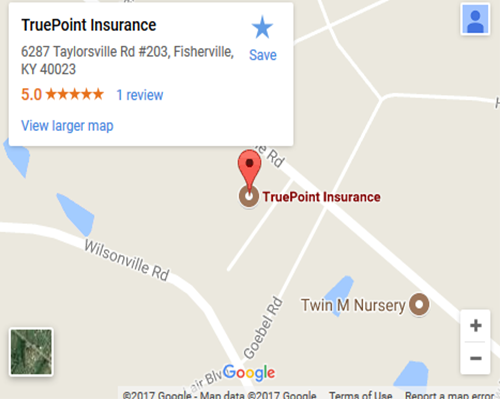
 Get Directions
 The staff at TruePoint Insurance in Fisherville, KY knows that the truth about what you need with insurance is the most important factor. The staffers here are honest and will tell you exactly what is necessary to make your motorhome experience the very best that it can be. You’ve taken the plunge. You’ve purchased the motorhome. Now, how do you best protect it?
 state? How often will you be driving out of state or internationally?
 compensation. Altering production methods, implementing automation, and revising policies and procedures are just a few avenues where businesses can eliminate specific risk.
 What is risk reduction role in risk management? Unlike the other three methods, risk reduction is not a stand-alone method. It is more akin to a complimenting strategy or modification. Examples of risk reduction would be businesses utilizing sprinklers, keeping parking lots and sidewalk free from ice and snow, or preemptively addressing employee actions that put an organization at risk. Individuals performing regular maintenance on their home or auto are practicing risk reduction. Installing a security system or erecting a fence with a locked entry gate around a pool are also examples of individuals utilizing risk reduction techniques.




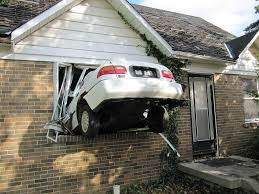

 Insurance that provides protection or indemnification against losses to the motor vehicles covered. The insurance comes in various forms. The term automobile or auto insurance is most commonly used to describe the mandatory and optional coverages required by each state’s Department of Motor Vehicles (aka DMV.)