 Contact
 Email an Agent

 Click to Call
 Get Directions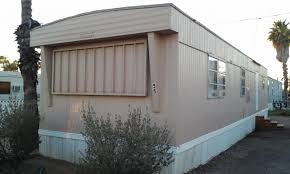
can be a challenge.
Insurers commonly provide coverage for mobile/manufactured homes by modifying a conventional homeowner policy with provisions called endorsements. The endorsements change key definitions and other elements of a conventional policy to fit a mobile or manufactured home situation. The result is a modified homeowner package that protects the home, outbuildings (unattached garages, sheds, etc.) and personal property. They also provide insurance for personal liability. Regardless of the type of home you own or live in, it is important that you learn about the coverage options that are available. You may find that different policies vary considerably in coverage and price.
Coverage for mobile/manufactured homes is generally offered using two approaches. Some policies include a laundry list of items (or perils) that may cause a loss. Other policies protect your home against everything EXCEPT for a host of specified perils. Either approach includes liability coverage that protects you for injuries or losses to others which you accidentally cause.
Property Insurance Needs
Any coverage option you choose is likely to reflect the fact that mobile homes are, well, mobile. Therefore coverage is affected by the fact that mobile homes:
- are able to move under their own power (or are capable of being easily transported);
- are more susceptible to wind damage,
- tend to lose value with age.
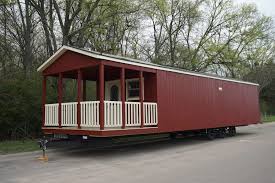
at multiple locations?
The mobility of such homes creates a special need to protect the financial interest of the business that lent the money to purchase the home. For example, a mobile homeowner who lives in Ohio decides to drive his home to Arkansas. The soon-to-be Arkansas resident “forgets” to mention his plan (and his new address) to his Ohio Mortgage Company. The Ohio lender would be out of luck if the policy didn’t include protection for this whimsical act. Another way in which mobile or manufactured homeowner policy differs from conventional homeowner coverage involves coverage for unattached buildings. This coverage is usually minimal for, say, $2,000. Such a provision helps keep the premiums for policies lower by avoiding paying claims on very low-value structures. The coverage is likely to be offered on an actual cash value basis. Unfortunately, mobile and manufactured homes tend to lose value over time.
The policy is likely to include a provision that requires you to get permission to move your home. Once granted, you’re likely to get thirty days of special transportation protection for collision; sinking, upset or stranding (a special, a higher deductible may apply during the move). Another common coverage feature is coverage for your attempt to move the home in order to prevent damage from an insured cause of loss. For example, you move your mobile home fifty feet to get away from a neighboring trailer that is on fire. IMPORTANT: coverage for moving endangered property usually has a modest limit (several hundred dollars is typical) because of owners who may be too heroic or clumsy for anyone’s good.
Liability Insurance Needs
The liability protection connected with mobile or manufactured homes is, for all practical purposes, identical to the liability provided to conventional homeowners. Why? The likelihood of guests to be hurt at your home, or your probability of being sued, tends to be the same. The important thing to remember is that your agent is a tremendous source for getting the information you need to be sure that your home and property are adequately protected at a reasonable price.
COPYRIGHT: Insurance Publishing Plus, Inc. 2016
All rights reserved. Production or distribution, whether in whole or in part, in any form of media or language; and no matter what country, state or territory, is expressly forbidden without written consent of Insurance Publishing Plus, Inc

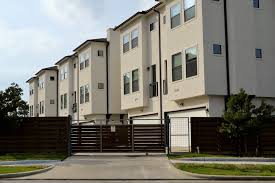
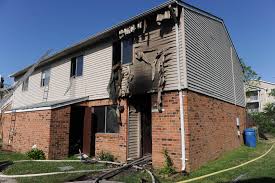


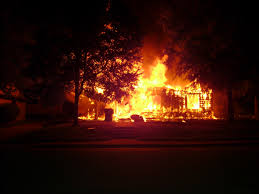
 When you buy a home whether it is your first home or forever home, it is a major investment. For most families, it is the largest investment they will ever make. It needs to be protected so that you will always have a roof over your head, a place to call home. If your house is destroyed in a fire or other disaster, you want to be sure that you will be able to rebuild, to replace what you had before it was destroyed.


 Whether you live in Louisville or Lexington or the surrounding communities, you’ll have no trouble finding a great body of water. The Kentucky River, Ohio River, Mississippi River, and many other’s present awesome waterways for Kentucky boaters.
 But before deciding to forgo watercraft boat insurance, first, consider what you paid for the boat. Now think how many opportunities there are for severely damaging your boat. On the way to the lake, you can relax a bit. As long as the boat is on a trailer being towed by your insurance truck or car, the liability exposure of the boat will be picked up by your auto insurance. Once off the trailer, the boat is your responsibility. During the process of unloading your boat, it’s possible for you to damage another boat. Just as easily you might also damage their truck, trailer, or even worse, another person. Once on the lake, there is an unlimited supply of exposures. Any of which might damage your boat. Damaging your boat and losing your entire investment would be bad enough, but if you are involved in an accident with another boat, you could potentially be out a boat plus buying a new one for the other party.
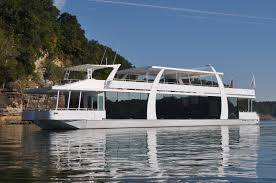
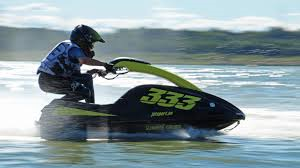 If you’re able to take the watercraft out onto the water, then it can be protected with a form of boat insurance. Whether you have a bass boat or you have a houseboat you like to take out on the lake,
 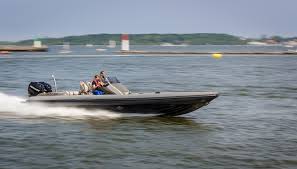 accident on your way to the lake, on the lake, or even inside of your garage, may put your purchase at financial risk, and can even put you at risk of paying out due to liability issues. It’s easy to find out what kind of coverage options are available for Kentucky boat owners. All you need to do is give the team at TruePoint Insurance a call today.
 Firing Up A Hearty Loss